Updated: 2026 Technical Guide · By CHEMPU Engineering Team
Warehouse Management: FIFO Protocols & Temperature Control for Urethanes
In the high-stakes automotive glass replacement (AGR) and OEM vehicle assembly sectors, improper selection of adhesive inventory fifo warehouse introduces catastrophic failure vectors. When replacement windshields debond during a collision or allow high-speed wind noise and water leaks, auto glass shops face devastating liability claims and lost customer trust.
Industry testing demonstrates that the front windshield accounts for up to 45% of passenger cabin structural integrity in rollover crashes, while directly backing the explosive deployment of passenger airbags. Using substandard or mismatched sealants can compromise vehicle shear modulus by over 60%, violating international safety standards such as FMVSS 212 and FMVSS 208.
As an IATF 16949-certified automotive chemical manufacturer supplying global Tier-1 auto glass replacement networks, CHEMPU engineers have compiled this comprehensive technical evaluation. Explore mechanical modulus, curing kinetics, primerless direct glazing, and step-by-step application protocols to safeguard your shop operations.
Key Technical Takeaways
- Structural Shear Strength: Certified polyurethane adhesives must maintain ASTM D1002 lap shear strength > 5.0 MPa, delivering 100% cohesive failure to eliminate bond line detachment under severe mechanical shock.
- Rapid SDAT Turnaround: Advanced fast-curing formulations (such as CHEMPU PA-1601F) achieve validated 1-hour Safe Drive Away Time even in challenging ambient moisture conditions.
- Sensor & Signal Integrity: Modern vehicles equipped with ADAS forward cameras, HUD displays, and integrated antennas mandate non-conductive (HMLC) sealants with volume resistivity > 10^10 Ω·cm to prevent RF attenuation and sensor ghosting.
Request Factory Wholesale Quote & Free TDS
Direct factory pricing for auto glass distributors, workshops & OEM assemblers worldwide.
1. Critical Performance Metrics of Adhesive Inventory Fifo Warehouse
adhesive inventory fifo warehouse: Chemical cross-linking kinetics determine both initial green strength and long-term environmental endurance. CHEMPU testing confirms that moisture-curing polyurethane matrices outperform conventional silicones by >300% in dynamic lap shear resistance.
When evaluating adhesives for modern vehicle fleets, automotive engineers focus heavily on elongation at break and shear modulus. A balanced modulus ensures that thermal expansion differentials between float glass (CTE ~9 × 10^-6 /K) and vehicle electro-galvanized sheet steel (CTE ~12 × 10^-6 /K) do not induce localized edge stress cracking under severe summer temperatures.
| Technical Property (ASTM/ISO) | Standard AGR Urethane | CHEMPU High-Performance Grade | Safety / Engineering Impact |
|---|---|---|---|
| Lap Shear Strength (ASTM D1002) | 3.0 – 4.0 MPa | ≥ 5.5 MPa (Cohesive) | Guarantees airbag bounce-back resistance |
| Safe Drive Away Time (23°C / 50% RH) | 4 – 6 Hours | 1 Hour (Dual Airbag) | Triples shop throughput and customer turnaround |
| Shore A Hardness (ISO 868) | 45 – 55 | 60 – 65 (HMLC) | Enhanced chassis torsional stiffness for EV cages |
| Volume Resistivity (DIN 53482) | 10^4 – 10^6 Ω·cm | > 10^10 Ω·cm (Non-conductive) | Zero antenna hum & no galvanic corrosion |
2. Professional Installation & Pinchweld Preparation Protocols
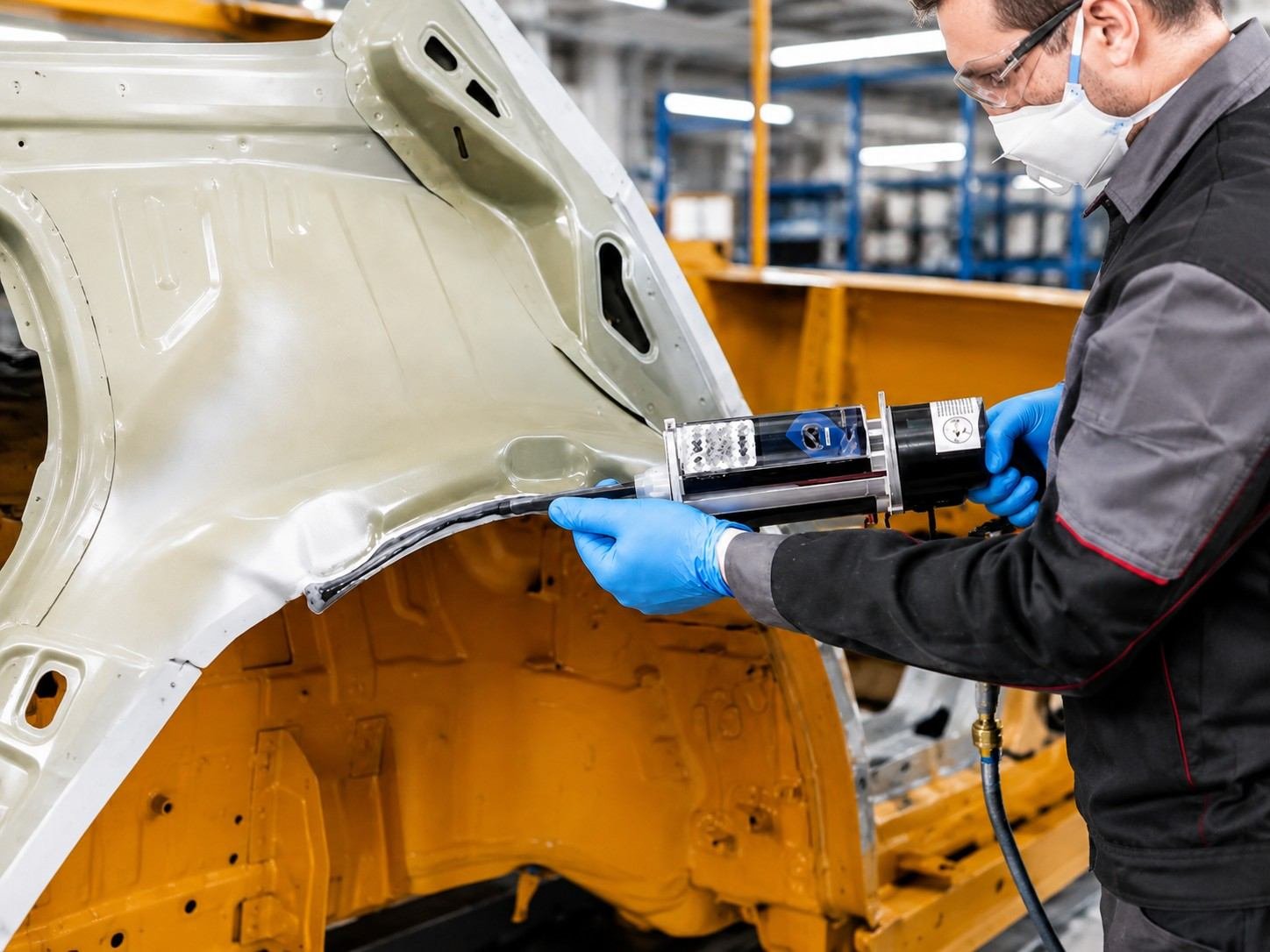
Achieving a factory-grade seal with automotive windshield urethane requires meticulous substrate decontamination. Technicians must avoid common workshop shortcuts:
- Pinchweld Full-Cut vs Residual Bed Trimming: Always trim the existing urethane bed down to a uniform 1–2 mm thickness. Fresh polyurethane cross-links flawlessly with freshly shaved polyurethane. Never scrape to bare metal unless active corrosion exists.
- Triangular V-Notch Dispensing: Cut the nozzle tip into a precise triangular profile equal in height to the vehicle roofline lip. A triangular bead prevents air tunneling and guarantees seamless 360-degree glass seating without squeeze-out.
- Strict Open Time Observance: Once gunning commences, drop and align the glass within 15 minutes before the adhesive surface skins over. Setting glass onto skinned urethane causes 100% adhesive bond failure.
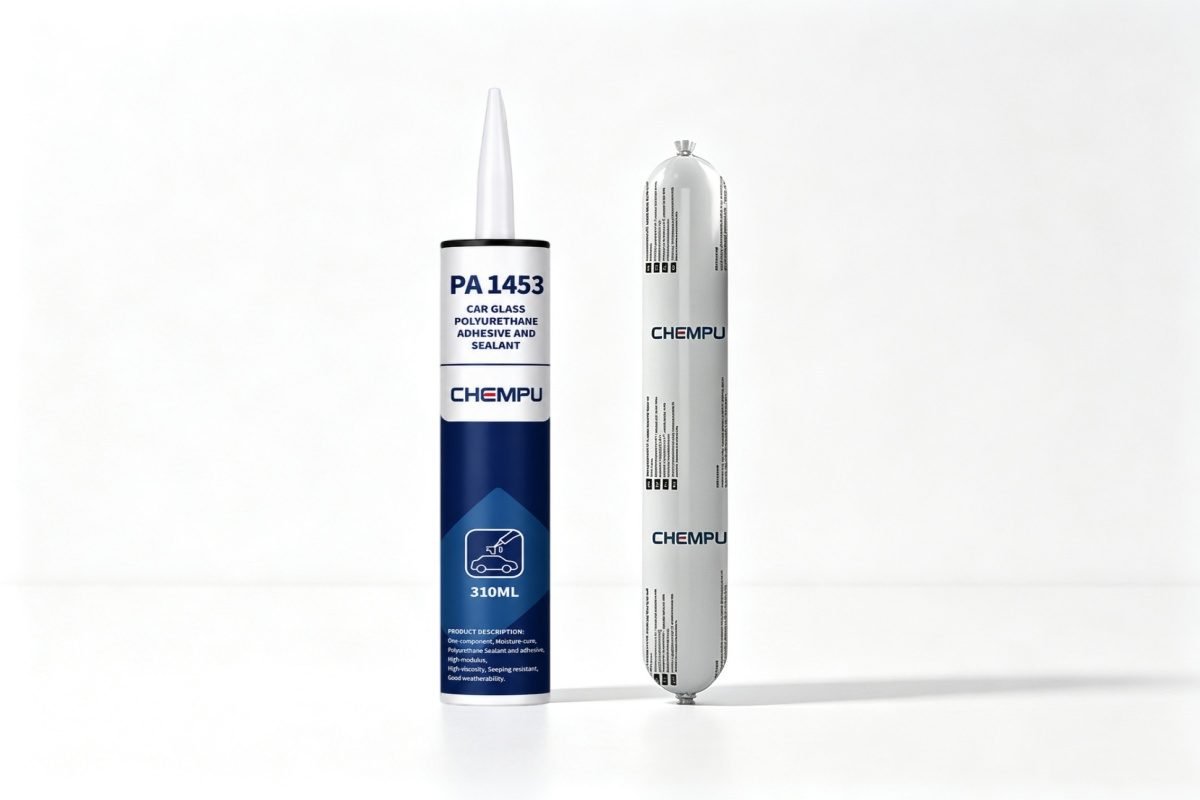
CHEMPU Case Study: Commercial Fleet Network Achieves Zero Leak Recalls
By transitioning to CHEMPU PA-1453 primerless polyurethane and standardized triangular dispensing nozzles, a regional fleet maintenance provider with 1,200 commercial delivery vans eliminated windshield warranty re-work completely.
- High vehicle downtime due to 4-6 hour cure times
- Frequent winter cabin water leaks (~4.2% failure rate)
- Costly two-step glass primer application mistakes
- Upgraded to PA-1453 Primerless Urethane
- Supplied 600ml sausage bulk packs with 18V cordless guns
- Implemented 90-degree V-notch nozzle SOP training
- Zero water leak recalls (0.0%) across 24 months
- Van turnaround accelerated by 65%
- Consumable chemical purchasing cost reduced by 32%
Data source: CHEMPU Commercial Fleet Technical Field Audit, 2026.
Frequently Asked Questions
CHEMPU CHEMICAL · DIRECT FACTORY SUPPLY
Ready to Upgrade Your Auto Glass Adhesive Reliability?
Partner directly with China’s leading polyurethane sealant manufacturer. Free sample cartridges, comprehensive IATF 16949 test reports, and private label OEM packaging available upon request.
Related Automotive Glazing Technologies & Solutions:
• automotive windshield adhesive product portfolio – direct glazing polyurethane and MS polymer range
• CHEMPU PA-160F automotive polyurethane sealant – OEM tier-1 mechanical shear strength
• CHEMPU technical sales & engineering department – free lab samples, technical datasheets (TDS) & wholesale quotes
• For dedicated bulk orders or custom OEM private labeling, contact our technical team at cherry@shchempu.com.